Drama
A Midsummer Night's Dream
by William Shakespeare
A Midsummer Night's Dream — a spoiler-aware guide to conflict, character, staging, context, and interpretation.
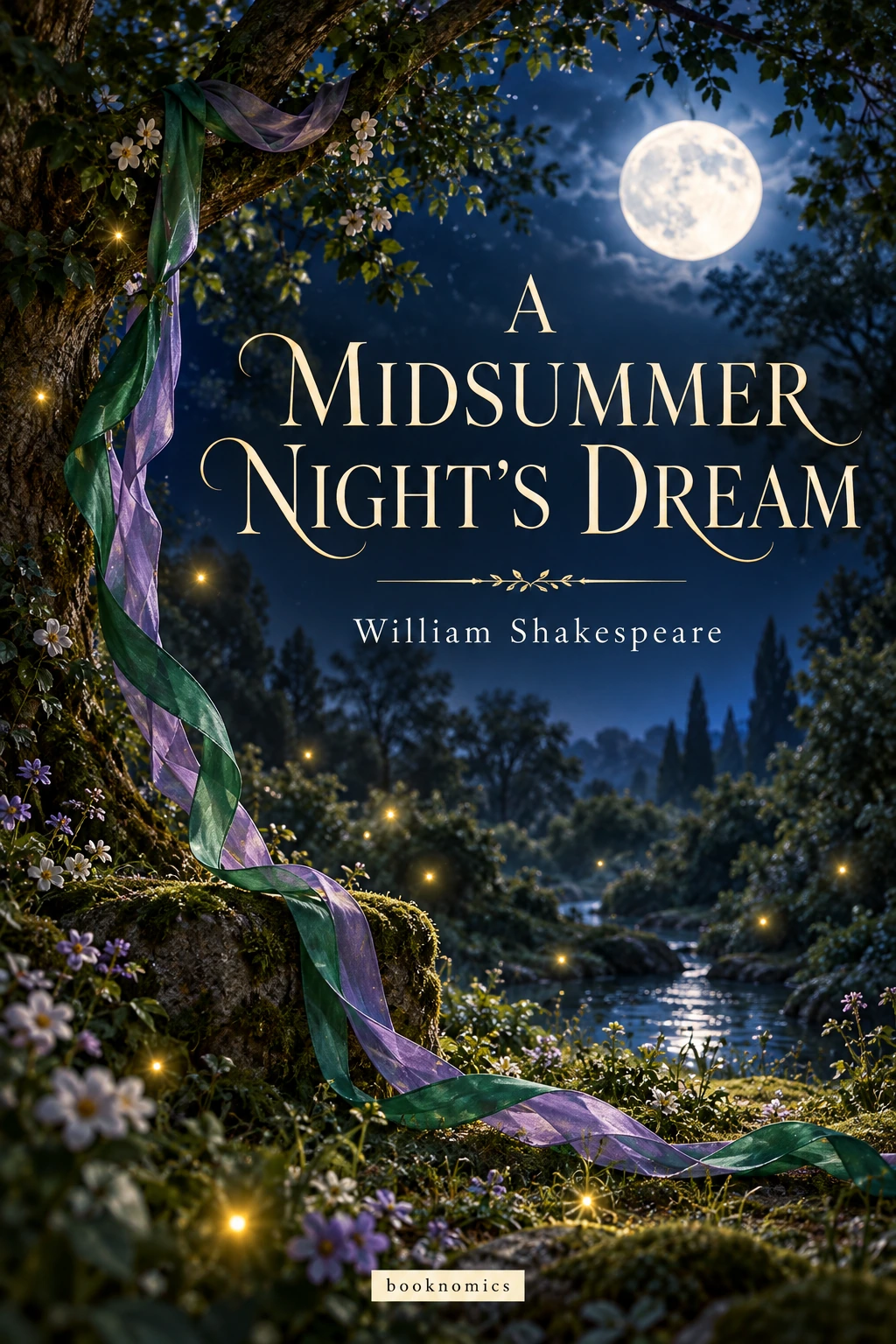
A Midsummer Night's Dream summary
A Midsummer Night's Dream by William Shakespeare is analyzed here as a dramatic work built around desire, mistaken identity, dream logic, theatrical play, and social order. The purpose is not to reconstruct every scene or reproduce distinctive dialogue, but to explain how conflict, information, stage action, character pressure, rhetoric, and theatrical structure create meaning. Because plays change in performance, the analysis separates what the text establishes from choices made by directors, actors, translators, and later traditions.
Key ideas
dramatic premise. In A Midsummer Night's Dream, dramatic premise helps explain how the play turns private motives and public pressures into visible action. The key question is what the audience knows, what characters believe, and how the gap between those two levels changes the stakes. central conflict. In A Midsummer Night's Dream, central conflict helps explain how the play turns private motives and public pressures into visible action. The key question is what the audience knows, what characters believe, and how the gap between those two levels changes the stakes. character pressure. In A Midsummer Night's Dream, character pressure helps explain how the play turns private motives and public pressures into visible action. The key question is what the audience knows, what characters believe, and how the gap between those two levels changes the stakes. motivation. In A Midsummer Night's Dream, motivation helps explain how the play turns private motives and public pressures into visible action. The key question is what the audience knows, what characters believe, and how the gap between those two levels changes the stakes. information and misunderstanding. In A Midsummer Night's Dream, information and misunderstanding helps explain how the play turns private motives and public pressures into visible action. The key question is what the audience knows, what characters believe, a…
Analysis
Deep analysis A Midsummer Night's Dream remains important because desire, mistaken identity, dream logic, theatrical play, and social order. Theatre converts ideas into bodies, timing, space, voice, silence, entrances, exits, and witnessed decisions. That means a dramatic work cannot be reduced to plot alone. Dramatic Premise In dramatic premise, A Midsummer Night's Dream shows how a play creates pressure by controlling who knows what, who can speak, who can act, and who must respond in public. Motivation should therefore be distinguished from consequence: a character can act from an understandable motive and still cause damage, while a harmful result does not automatically reveal the full intention behind it. The historical context matters, but it should not become a shortcut. Social norms around class, gender, law, religion, monarchy, family, or war can explain why choices carry particular weight without requiring a modern reader to endorse those norms. dramatic premise is strongest when the original stakes and later ethical questions remain visible together. Performance creates another layer. Casting, pace, gesture, cuts, design, and translation can shift sympathy and emphasis without changing the basic text. This is why competing productions of the same play may support different interpretations while remaining grounded in the same dramatic structure. Central Conflict In c…
Practical application
5-minute reading lab 1. Start with Dramatic Premise. In one sentence, write what this section changes about your understanding of the book. 2. Put Dramatic Premise beside Central Conflict. Where do they reinforce each other, and where do they create tension? 3. Return to Character Pressure and choose one example, argument, or piece of evidence already discussed in the analysis. Explain it in your own words. 4. Write one boundary question: what might this reading miss, or what would need stronger evidence? 5. Carry forward: finish this sentence with one concrete idea — “After reading A Midsummer Night's Dream, I now notice differently.”
Continue exploring
More English book summaries · Browse the full library · More Drama books
- A Doll's House
Henrik Ibsen
Drama - Agamemnon
Aeschylus
Drama - Ajax
Sophocles
Drama - Alcestis
Euripides
Drama - An Enemy of the People
Henrik Ibsen
Drama - Antigone
Sophocles
Drama