Classic Literature
A Tale of Two Cities
by Charles Dickens
A historical novel set in London and Paris around the French Revolution linking private sacrifice and resurrection with
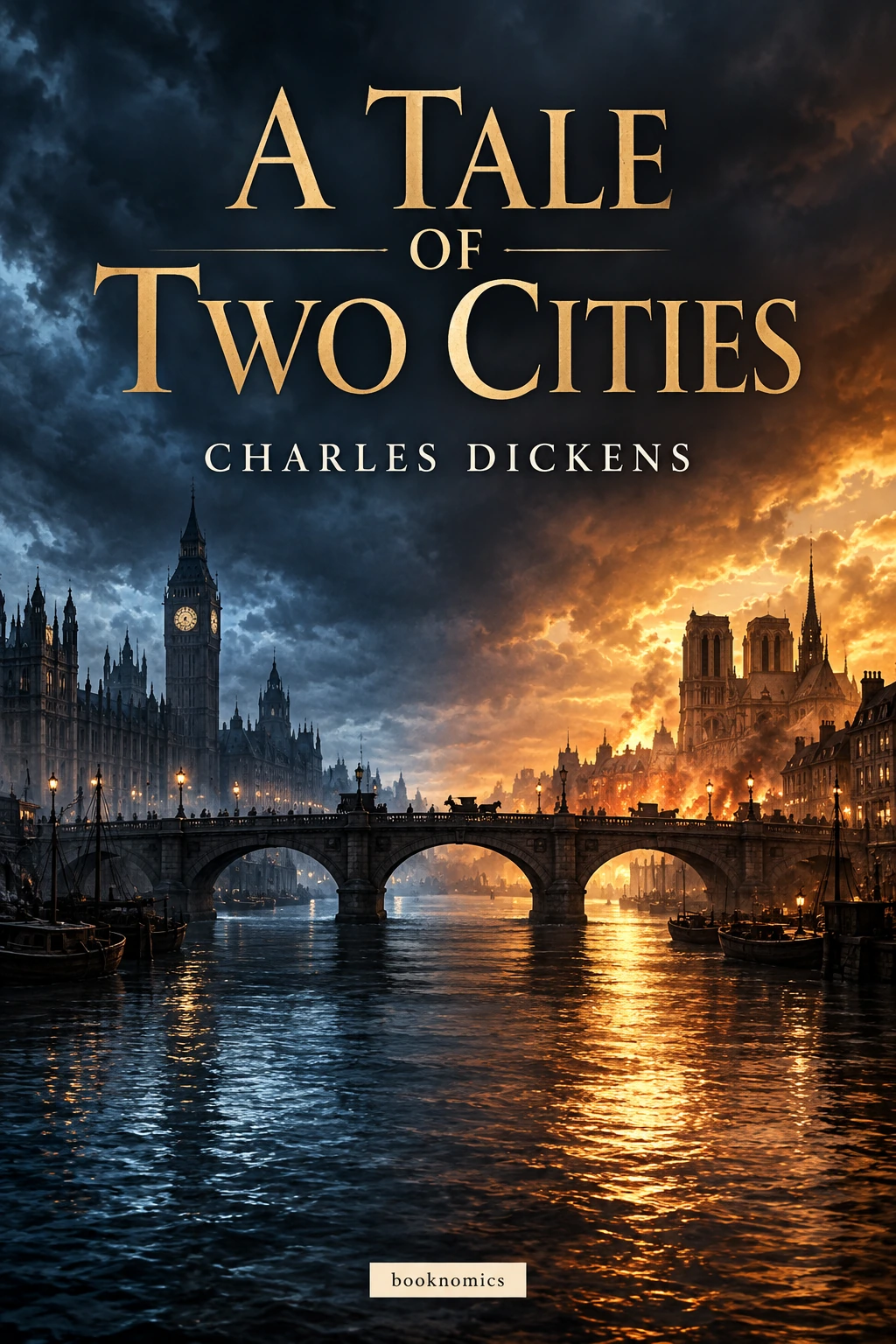
A Tale of Two Cities summary
A Tale of Two Cities by Charles Dickens is a classic literature work centered on this problem: A historical novel set in London and Paris around the French Revolution linking private sacrifice and resurrection with. Key anchors include Charles Darnay, Sydney Carton, Lucie Manette, Dr Manette. This Booknomics summary explains how those elements connect instead of treating them as isolated labels. It is written as original analysis rather than a reproduction of the book, and it avoids invented quotations, unsupported superlatives, and guaranteed-result claims. The reading follows character, narrative consequence, setting, symbolism, and social context. Spoilers are used when necessary to explain development, but no passages are copied or imitated. The emphasis is on reader usefulness, specificity, and intellectual independence rather than keyword repetition or artificial certainty.
Key ideas
Charles Darnay. In A Tale of Two Cities, this idea helps organize the book's central problem. It should be read alongside Sydney Carton because the two expose a relationship between motive, mechanism, evidence, consequence, or trade-off rather than a stand-alone slogan. Sydney Carton. In A Tale of Two Cities, this idea helps organize the book's central problem. It should be read alongside Lucie Manette because the two expose a relationship between motive, mechanism, evidence, consequence, or trade-off rather than a stand-alone slogan. Lucie Manette. In A Tale of Two Cities, this idea helps organize the book's central problem. It should be read alongside Dr Manette because the two expose a relationship between motive, mechanism, evidence, consequence, or trade-off rather than a stand-alone slogan. Dr Manette. In A Tale of Two Cities, this idea helps organize the book's central problem. It should be read alongside Revolutionary violence because the two expose a relationship between motive, mechanism, evidence, consequence, or trade-off rather than a stand-alone slogan. Revolutionary violence. In A Tale of Two Cities, this idea helps organize the book's central problem. It should be read alongside Sacrifice and resurrection because the two expose a relationship between motive, mechanism, evidence, consequence, or trade-off rather than a stand-alone slogan. Sacrifice and resurrect…
Analysis
The book's central problem Charles Dickens's work in A Tale of Two Cities can be approached through a specific central concern: A historical novel set in London and Paris around the French Revolution linking private sacrifice and resurrection with. The goal of this analysis is to reconstruct the work's structure accurately enough to be useful while preserving uncertainty and avoiding copied prose. Because narrative meaning depends on development and consequence, this analysis uses spoilers where needed and distinguishes what characters say from what the plot demonstrates. 1. Charles Darnay A useful way into A Tale of Two Cities is through Charles Darnay. This element concentrates several concerns in one place, allowing the reader to compare intention with result, appearance with reality, or principle with circumstance. It also creates a check against vague interpretation. In a fiction reading, Charles Darnay should be connected to narrative position: who perceives it, who misunderstands it, what choice brings it into focus, and what changes afterward. This prevents A Tale of Two Cities from being reduced to a theme list. Character, setting, symbol, and plot carry the interpretation together. Compare Charles Darnay with Sydney Carton. Placed side by side, the two elements show how A Tale of Two Cities creates tension rather than merely delivering a moral. One may represent aspi…
Practical application
Reading & Reflection Application 1. Track how Charles Darnay changes from the opening to the ending. 2. Mark one scene where Sydney Carton conflicts with Lucie Manette. 3. Note what Dr Manette adds that a plain plot summary would miss. 4. Compare a character's stated motive with the consequence attached to Revolutionary violence. 5. Write a short interpretation of Sacrifice and resurrection and one fact that could challenge it.
Continue exploring
More English book summaries · Browse the full library · More Classic Literature books
- 1984
George Orwell
Classic Literature - A Christmas Carol
Charles Dickens
Classic Literature - A Connecticut Yankee in King Arthur's Court
Mark Twain
Classic Literature - A Farewell to Arms
Ernest Hemingway
Classic Literature - A Portrait of the Artist as a Young Man
James Joyce
Classic Literature - Adventures of Huckleberry Finn
Mark Twain
Classic Literature