Literary Fiction
Cannery Row
by John Steinbeck
An original Booknomics reading guide to narrative structure, conflict, character pressure, and consequence.
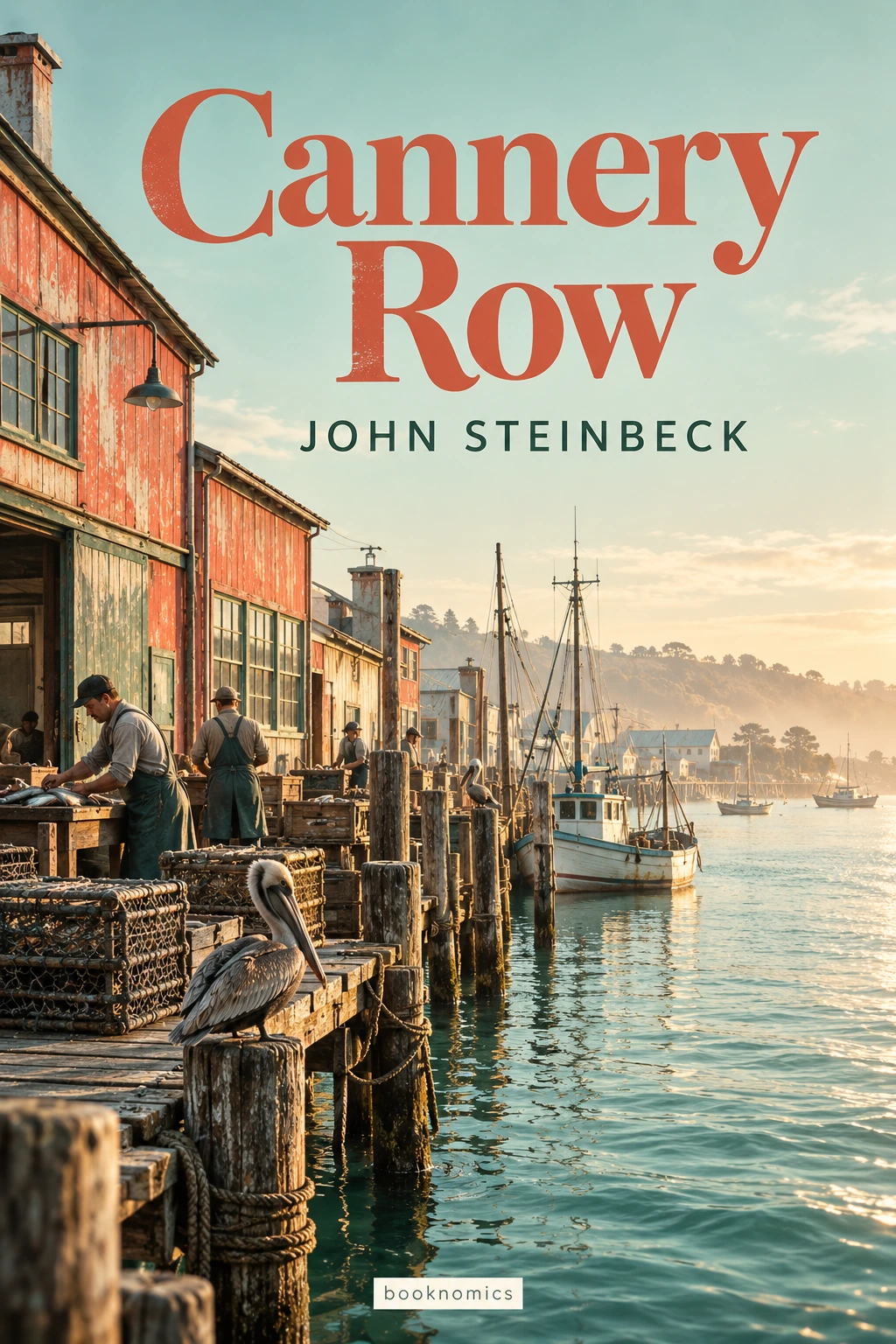
Cannery Row summary
Cannery Row by John Steinbeck is approached here as a literary fiction work whose meaning emerges from narrative structure, character pressure, setting, and consequence. Published in 1945, this Booknomics guide uses point of view, identity, memory, relationships, social pressure, and language as reading lenses. The aim is original spoiler-aware analysis without reproducing passages, reconstructing chapters, or imitating the author's prose. A condensed guide cannot preserve voice, pacing, atmosphere, or every ambiguity, so close readers should return to the original work.
Key ideas
point of view. In Cannery Row, this lens helps explain how the work develops its central problem. The useful questions are what the idea means here, what evidence or experience supports it, what changes when it becomes important, what trade-off it creates, and what limitation prevents it from becoming a universal rule. identity. In Cannery Row, this lens helps explain how the work develops its central problem. The useful questions are what the idea means here, what evidence or experience supports it, what changes when it becomes important, what trade-off it creates, and what limitation prevents it from becoming a universal rule. memory. In Cannery Row, this lens helps explain how the work develops its central problem. The useful questions are what the idea means here, what evidence or experience supports it, what changes when it becomes important, what trade-off it creates, and what limitation prevents it from becoming a universal rule. relationships. In Cannery Row, this lens helps explain how the work develops its central problem. The useful questions are what the idea means here, what evidence or experience supports it, what changes when it becomes important, what trade-off it creates, and what limitation prevents it from becoming a universal rule. social pressure. In Cannery Row, this lens helps explain how the work develops its central problem. The useful questions are wh…
Analysis
Central reading Cannery Row by John Steinbeck can be examined through structure, evidence, practice, and consequence without reproducing the original text. The deeper questions concern what the work asks the reader to notice, what assumptions guide its reasoning, what feedback changes the picture, and where limits or uncertainty remain. 1. Point Of View and Identity point of view matters in Cannery Row because it separates surface action from narrative function. An event can advance the story while also changing trust, redistributing information, increasing vulnerability, or redefining a relationship. Reading at both levels explains why developments matter beyond the moment in which they occur. A second test concerns point of view. identity may look different depending on who knows what, who misunderstands the situation, and what remains concealed. Suspense, intimacy, and surprise depend on these gaps. The role of point of view also changes across time. Early in the work it may create expectation; later it can become evidence, reversal, conflict, sacrifice, or reinterpretation. Later knowledge can change the significance of earlier choices without erasing earlier uncertainty. Compare point of view with identity. Their interaction can expose a conflict between desire and evidence, loyalty and safety, systems and individuals, or appearance and reality. Finally, test the boundary…
Practical application
Practical or critical application 1. Define one real question related to point of view. 2. Record the current baseline or interpretation. 3. Compare identity with memory. 4. Watch relationships for side effects, counterevidence, or trade-offs. 5. Review the outcome through social pressure. 6. Decide whether language should change the next iteration. No outcome is guaranteed.
Continue exploring
More English book summaries · Browse the full library · More Literary Fiction books
- A Little Life
Hanya Yanagihara
Literary Fiction - American Psycho
Bret Easton Ellis
Literary Fiction - Americanah
Chimamanda Ngozi Adichie
Literary Fiction - Call Me by Your Name
André Aciman
Literary Fiction - Daisy Jones & The Six
Taylor Jenkins Reid
Literary Fiction - Dreamcatcher
Stephen King
Literary Fiction