Fantasy
Clockwork Angel
by Cassandra Clare
An original Booknomics reading guide to narrative structure, conflict, character pressure, and consequence.
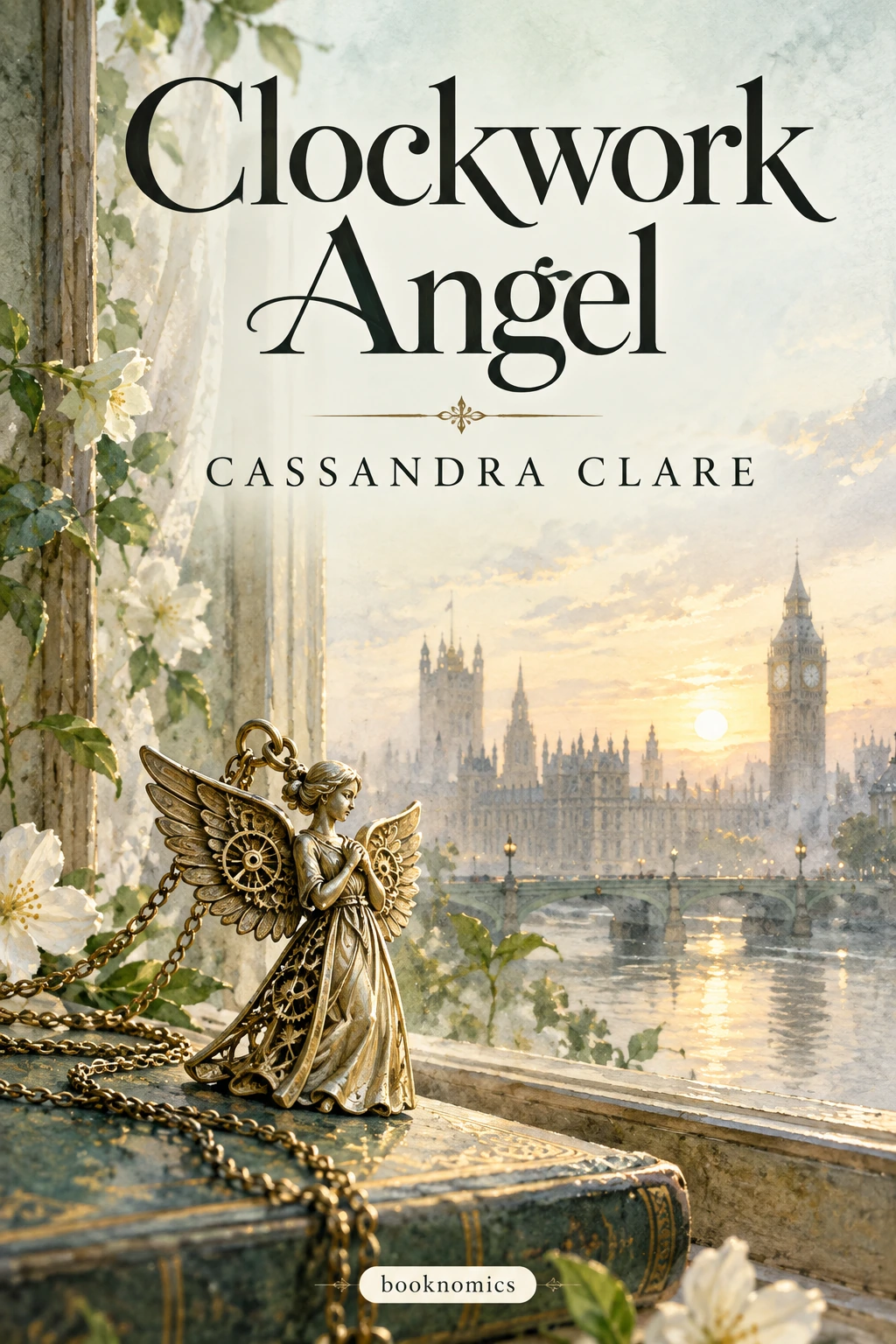
Clockwork Angel summary
Clockwork Angel by Cassandra Clare is approached here as a fantasy work whose value lies in the interaction of narrative structure, character pressure, setting, and consequence. Published in 2010, the book is treated as a complete work rather than as a list of plot points. This Booknomics guide focuses on how information is revealed, how relationships and systems change under pressure, and how later developments can alter the meaning of earlier details. The recurring analytical lenses are worldbuilding, power, loyalty, myth, identity, and conflict. These are reading tools rather than claims that every scene has one fixed interpretation. The page provides an original spoiler-aware orientation and analysis without reproducing passages, reconstructing chapters, or imitating the author's prose. A condensed guide cannot preserve voice, atmosphere, pacing, scene-level irony, or the cumulative effect of the original work, so close readers should return to the book itself.
Key ideas
worldbuilding. In Clockwork Angel, this is a useful lens for examining how the narrative moves from setup to pressure and then toward consequence. The important question is not simply whether the idea appears, but how it changes what a character can know, choose, conceal, risk, desire, fear, or understand. A strong reading connects the lens with concrete developments in the work rather than treating it as a generic genre label. power. In Clockwork Angel, this is a useful lens for examining how the narrative moves from setup to pressure and then toward consequence. The important question is not simply whether the idea appears, but how it changes what a character can know, choose, conceal, risk, desire, fear, or understand. A strong reading connects the lens with concrete developments in the work rather than treating it as a generic genre label. loyalty. In Clockwork Angel, this is a useful lens for examining how the narrative moves from setup to pressure and then toward consequence. The important question is not simply whether the idea appears, but how it changes what a character can know, choose, conceal, risk, desire, fear, or understand. A strong reading connects the lens with concrete developments in the work rather than treating it as a generic genre label. myth. In Clockwork Angel, this is a useful lens for examining how the narrative moves from setup to pressure and then…
Analysis
Central reading Clockwork Angel by Cassandra Clare is analyzed here through narrative structure rather than by attempting to reproduce the original text. The deeper questions concern what information is available, how characters respond to pressure, which social, emotional, historical, technological, or imaginative conditions shape their choices, and how later consequences reshape the reader's understanding. A strong interpretation remains tied to the work while allowing ambiguity where the work itself leaves room for it. 1. Worldbuilding worldbuilding matters in Clockwork Angel because it helps separate surface action from narrative function. A scene can advance events while also changing trust, redistributing information, intensifying vulnerability, changing power, or redefining a relationship. Reading at both levels prevents the work from becoming a bare sequence of incidents and helps explain why particular developments have consequences beyond the moment in which they occur. A second way to examine worldbuilding is through point of view and access to information. Suspense, surprise, intimacy, wonder, doubt, and reversal all depend on who understands the situation, who misunderstands it, and what remains hidden. The reader should distinguish established facts from interpretations produced by fear, hope, habit, loyalty, ambition, social rules, or incomplete evidence. The ro…
Practical application
Reading & reflection application 1. Track worldbuilding across three points in the narrative and note what changes. 2. Compare power with loyalty and identify where they pull the reader or a character in different directions. 3. Note one place where the work limits, delays, or complicates information. 4. Use myth to identify a decision whose consequences become clearer later. 5. Ask whether identity functions mainly as cause, constraint, symbol, relationship pressure, or result. 6. Reconsider the ending through conflict and write one interpretation supported by more than one part of the work.
Continue exploring
More English book summaries · Browse the full library · More Fantasy books
- A Clash of Kings
George R. R. Martin
Fantasy - A Court of Thorns and Roses
Sarah J. Maas
Fantasy - A Game of Thrones
George R. R. Martin
Fantasy - Assassin's Apprentice
Robin Hobb
Fantasy - Belgarath the sorcerer
David Eddings
Fantasy - Blood of Elves
Andrzej Sapkowski
Fantasy