Nature
My Family and other Animals
by Gerald Malcolm Durrell
An original Booknomics guide to the work’s structure, evidence, ideas, context, and limitations.
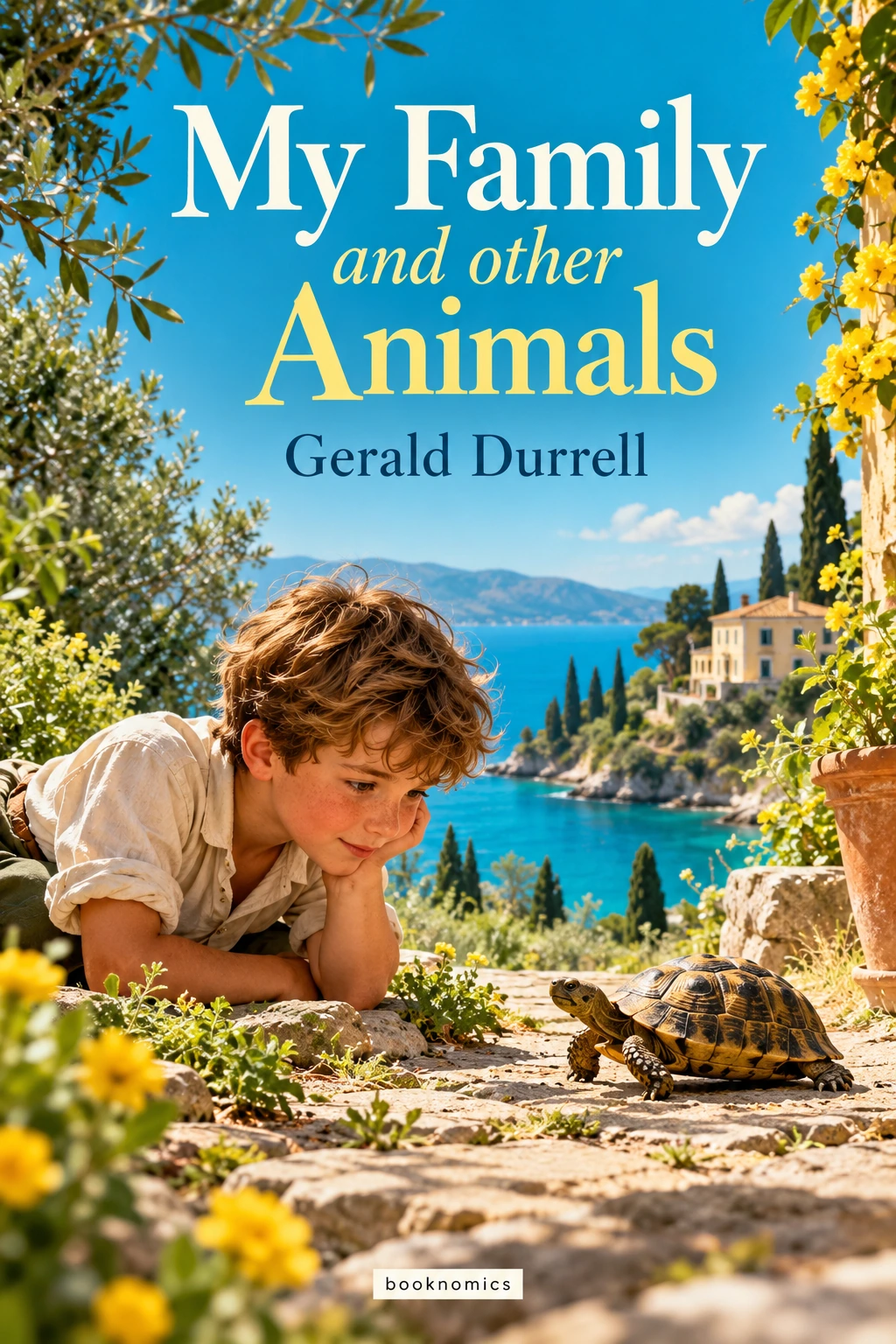
My Family and other Animals summary
My Family and other Animals by Gerald Malcolm Durrell is approached here as a nature work organized around concepts, claims, evidence, and implications. Published in 1956, the analysis uses observation, ecology, interdependence, adaptation, scale, and evidence as its main lenses. The goal is to reconstruct the work's intellectual architecture while keeping assumptions, counterarguments, uncertainty, and context visible. This page uses original explanatory prose and does not reproduce copyrighted passages or treat a summary as a substitute for the book.
Key ideas
observation. In My Family and other Animals, this is one of the main analytical lenses for reconstructing the work's reasoning. The key questions are what the concept means, what supports it, what follows if the claim is accepted, and what limitations keep it from becoming a universal conclusion. ecology. In My Family and other Animals, this is one of the main analytical lenses for reconstructing the work's reasoning. The key questions are what the concept means, what supports it, what follows if the claim is accepted, and what limitations keep it from becoming a universal conclusion. interdependence. In My Family and other Animals, this is one of the main analytical lenses for reconstructing the work's reasoning. The key questions are what the concept means, what supports it, what follows if the claim is accepted, and what limitations keep it from becoming a universal conclusion. adaptation. In My Family and other Animals, this is one of the main analytical lenses for reconstructing the work's reasoning. The key questions are what the concept means, what supports it, what follows if the claim is accepted, and what limitations keep it from becoming a universal conclusion. scale. In My Family and other Animals, this is one of the main analytical lenses for reconstructing the work's reasoning. The key questions are what the concept means, what supports it, what follows if the cl…
Analysis
Central reading My Family and other Animals by Gerald Malcolm Durrell can be examined as an argument and explanatory framework rather than a source of slogans. The useful questions concern definitions, assumptions, evidence, causal mechanisms, counterarguments, scale, and implications. The aim is understanding with critical distance, not automatic agreement. 1. Observation observation is useful in My Family and other Animals because it identifies one part of the work's explanatory structure. Start by defining the term precisely, then ask what kind of evidence supports it and whether the conclusion is descriptive, causal, interpretive, or normative. These claims require different kinds of support. The connection with ecology creates an evidence test. What observation would support the mechanism, what alternative explanation could produce the same result, and what evidence would count against the claim. Scale matters as well. observation may describe an individual, institution, ecosystem, society, technology, or conceptual model. Moving across scales without additional evidence can make an argument appear stronger than it is. Context creates another boundary. Historical conditions, incentives, measurement choices, institutions, and selection effects can all change what the same observation means. Finally, compare observation with ecology and identify the unresolved tension. The…
Practical application
Study & critical application 1. Define observation in your own words. 2. Identify what evidence supports ecology. 3. Compare interdependence with adaptation. 4. Write one boundary condition for scale. 5. Identify one plausible counterargument involving evidence. 6. State what evidence would make you revise your interpretation.
Continue exploring
More English book summaries · Browse the full library · More Nature books
- Bringing the Mountain Home
SueEllen Campbell
Nature - Desert Solitaire
Edward Abbey
Nature - Essays
Ralph Waldo Emerson
Nature - My first summer in the Sierra
John Muir
Nature - Nature
Ralph Waldo Emerson
Nature - On the origin of species by means of natural selection
Charles Darwin
Nature