Classic Literature
Pride and Prejudice
by Jane Austen
A sharp, funny study of love, class, money, family pressure, and self-deception in which Elizabeth Bennet and Fitzwilliam Darcy must each revise the judgments that keep them apart.
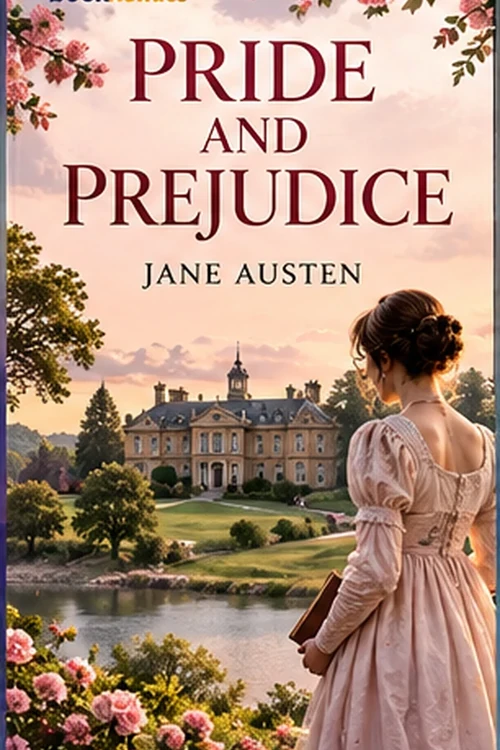
Pride and Prejudice summary
Jane Austen’s “Pride and Prejudice” follows Elizabeth Bennet, the intelligent and independent second daughter of a financially vulnerable country family, as she navigates courtship, class, reputation, and family embarrassment in Regency England. When wealthy Charles Bingley rents Netherfield, Mrs. Bennet immediately hopes he will marry one of her five daughters. Bingley is quickly drawn to the gentle Jane Bennet, while his reserved friend Fitzwilliam Darcy initially appears arrogant and dismissive. Elizabeth overhears Darcy slight her and forms a lasting negative opinion. That prejudice is strengthened by George Wickham, a charming militia officer who tells Elizabeth that Darcy cruelly denied him a promised living. Meanwhile the pompous clergyman Mr. Collins proposes to Elizabeth, is refused, and quickly marries her practical friend Charlotte Lucas. Darcy unexpectedly falls in love with Elizabeth and proposes, but his first proposal mixes passion with condescension. Elizabeth rejects him, accusing him of separating Bingley from Jane and mistreating Wickham. Darcy responds with a letter that transforms the novel: he admits influencing Bingley but explains Wickham’s history, including Wickham’s attempt to elope with Darcy’s young sister Georgiana for her fortune. Elizabeth gradually realizes how much her first impressions were shaped by wounded pride and insufficient evidence. A visit to Darcy’s estate, Pemberley, reveals him as a responsible landlord, affectionate brother, and more generous man than she imagined. When Lydia Bennet runs away with Wickham, threatening the reputation of the entire family, Darcy secretly finds the couple, pays Wickham’s debts, and arranges their marriage. His intervention helps save the Bennets from social ruin. Bingley returns and marries…
Key ideas
First impressions can contain truth yet still become dangerously incomplete. Elizabeth’s intelligence does not protect her from vanity or confirmation bias. Darcy’s moral growth requires him to distinguish principle from class arrogance. Marriage in the novel is both an emotional relationship and an economic institution. Charlotte Lucas reveals how limited women’s financial choices shape marriage decisions. Jane and Bingley show the strengths and weaknesses of excessive good nature and passivity. Lydia and Wickham demonstrate attraction without judgment or responsibility. Mr. Bennet’s wit cannot substitute for responsible parenting. The Gardiners challenge the assumption that social rank reliably indicates refinement. Elizabeth and Darcy become compatible only after both learn to revise themselves.
Analysis
Austen’s achievement is that the central romance develops through moral epistemology: the question of how people know other people. Elizabeth is perceptive but not infallible. Darcy is principled but socially arrogant. Their attraction matters because each possesses qualities the other needs, but their relationship becomes viable only when they learn that intelligence without humility produces error. The first proposal is the novel’s structural pivot. Elizabeth’s rejection forces Darcy to examine his manners; Darcy’s letter forces Elizabeth to examine her judgment. Neither transformation depends on the other simply “winning.” Each does private moral work. Money and class keep the story from becoming a purely psychological romance. The entail at Longbourn, Charlotte’s practical marriage, Wickham’s pursuit of fortunes, Lydia’s vulnerability, and Lady Catherine’s assumptions all show how intimate life is shaped by economic structure. Austen’s comedy is therefore social analysis: the ridiculous behavior is funny because the stakes beneath it are real. The ending does not abolish class hierarchy, but it imagines a better use of privilege. Pemberley under Darcy and Elizabeth becomes a household where rank is moderated by intelligence, gratitude, and humane connection. Misreading, self-correction, and moral growth The novel’s central romance depends on a problem of interpretation. El…
Practical application
Practical Application 1. Choose one idea: Select one key idea or theme from Pride and Prejudice. 2. Find the evidence: Identify the argument, scene, pattern, or example in the summary/analysis that supports it. 3. Connect it to context: Write where the idea applies to your work, study, relationships, decisions, or reading—and where it may not. 4. Run a small test: Choose one concrete action, question, or observation for today. 5. Review the result: Note what changed, what did not, and one counter-example. The goal is not to memorize the book but to test its ideas thoughtfully.
Continue exploring
More English book summaries · Browse the full library · More Classic Literature books
- 1984
George Orwell
Classic Literature - A Christmas Carol
Charles Dickens
Classic Literature - A Connecticut Yankee in King Arthur's Court
Mark Twain
Classic Literature - A Farewell to Arms
Ernest Hemingway
Classic Literature - A Portrait of the Artist as a Young Man
James Joyce
Classic Literature - A Room with a View
E. M. Forster
Classic Literature