Language
Progress in Language
by Otto Jespersen
Progress in Language — an original guide to its linguistic ideas, evidence, historical context, and limits.
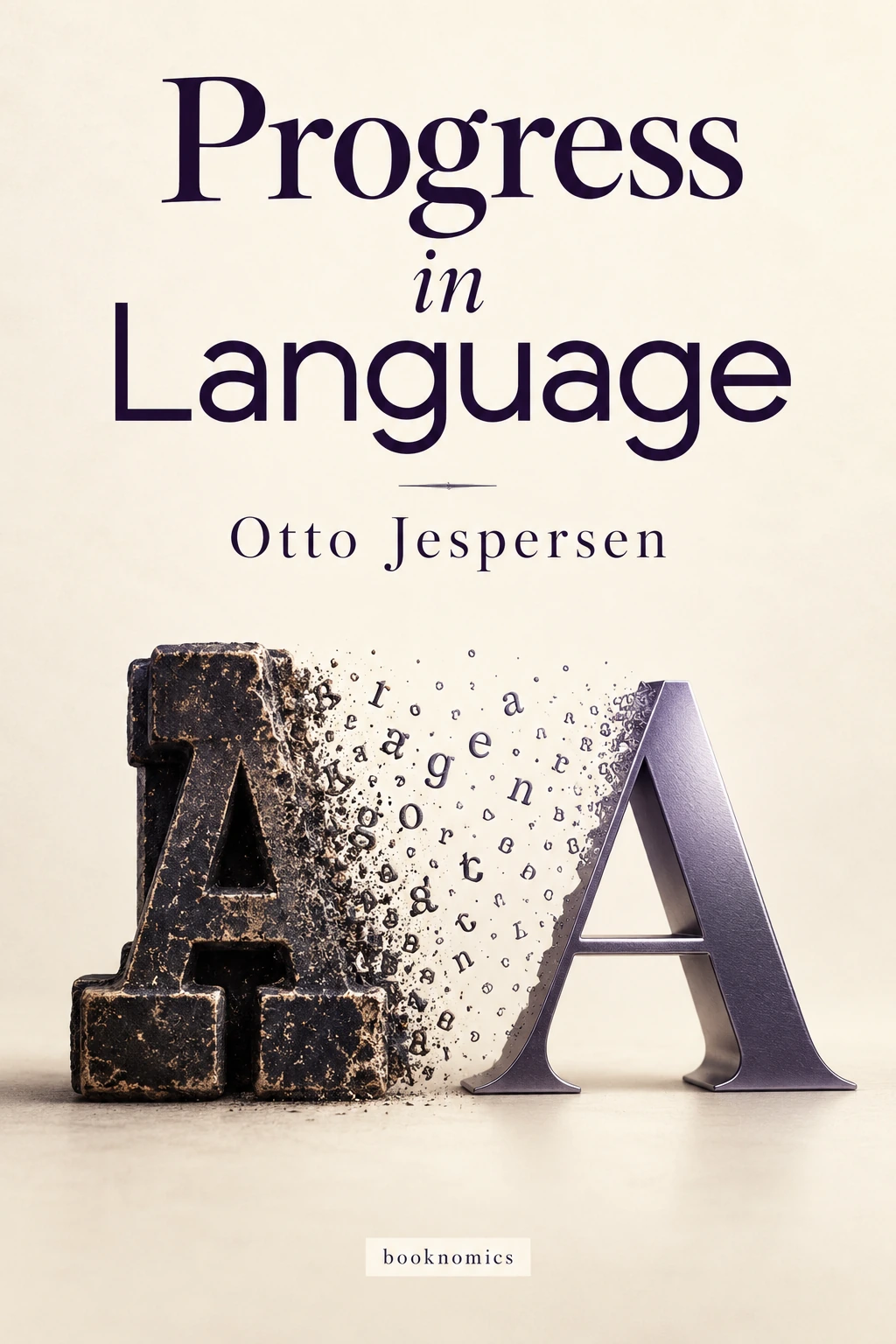
Progress in Language summary
Progress in Language by Otto Jespersen is analyzed as a work about grammatical change, simplification, analogy, sound change, and arguments about linguistic progress. Older language books often mix description, prescription, pedagogy, philology, social judgment, and the linguistic assumptions of their period. This Booknomics guide therefore distinguishes observations about how language works from rules about how an author believed language ought to be used. It does not reproduce dictionary entries, exercise sets, or copyrighted modern editorial material.
Key ideas
purpose and audience. In Progress in Language, purpose and audience helps clarify what the author treats as evidence about language and what belongs to teaching, social convention, historical explanation, or prescriptive judgment. units of analysis. In Progress in Language, units of analysis helps clarify what the author treats as evidence about language and what belongs to teaching, social convention, historical explanation, or prescriptive judgment. sound system. In Progress in Language, sound system helps clarify what the author treats as evidence about language and what belongs to teaching, social convention, historical explanation, or prescriptive judgment. word structure. In Progress in Language, word structure helps clarify what the author treats as evidence about language and what belongs to teaching, social convention, historical explanation, or prescriptive judgment. sentence structure. In Progress in Language, sentence structure helps clarify what the author treats as evidence about language and what belongs to teaching, social convention, historical explanation, or prescriptive judgment. meaning. In Progress in Language, meaning helps clarify what the author treats as evidence about language and what belongs to teaching, social convention, historical explanation, or prescriptive judgment. usage and variation. In Progress in Language, usage and variation helps clari…
Analysis
Deep analysis Progress in Language is significant because it organizes grammatical change, simplification, analogy, sound change, and arguments about linguistic progress. approaches to language study evolve over time, so the book should be read both as an analysis of language and as evidence for the intellectual standards of its own period. Purpose And Audience In purpose and audience, Progress in Language raises a methodological question: is the author describing patterns found in speech and texts, reconstructing historical change, teaching a practical skill, or defending a social standard. Those tasks overlap, but they are not identical. Keeping them separate helps prevent a historical usage preference from being mistaken for a timeless linguistic law. the quality of evidence matters too. Examples can come from literary texts, dialect collection, pronunciation observation, comparative word forms, school usage, dictionaries, or the author's own judgments. The strength of a conclusion depends on how representative that evidence is. purpose and audience therefore benefits from comparison with modern corpus, sociolinguistic, phonetic, or historical research. A final issue is change. Languages do not remain fixed, and variation is not automatically decay. Older writers may interpret innovation through cultural or educational values. A modern reader can still learn from the data w…
Practical application
1. Identify whether one claim is descriptive or prescriptive. 2. Note the linguistic evidence used. 3. Compare one historical category with modern terminology. 4. Find one example of language change or variation. 5. note one period-specific assumption that should not be treated as universal.
Continue exploring
More English book summaries · Browse the full library · More Language books
- A Concise Etymological Dictionary of the English Language
Walter W. Skeat
Language - A Grammar of Spoken English on a Strictly Phonetic Basis
Harold E. Palmer
Language - A New English Grammar, Logical and Historical
Henry Sweet
Language - A Sanskrit Grammar
William Dwight Whitney
Language - A Vedic Grammar for Students
Arthur A. Macdonell
Language - An Introduction to Comparative Philology
P. D. Giles
Language