Science Fiction
The Kill Order
by James Dashner
An original Booknomics reading guide to narrative structure, conflict, character pressure, and consequence.
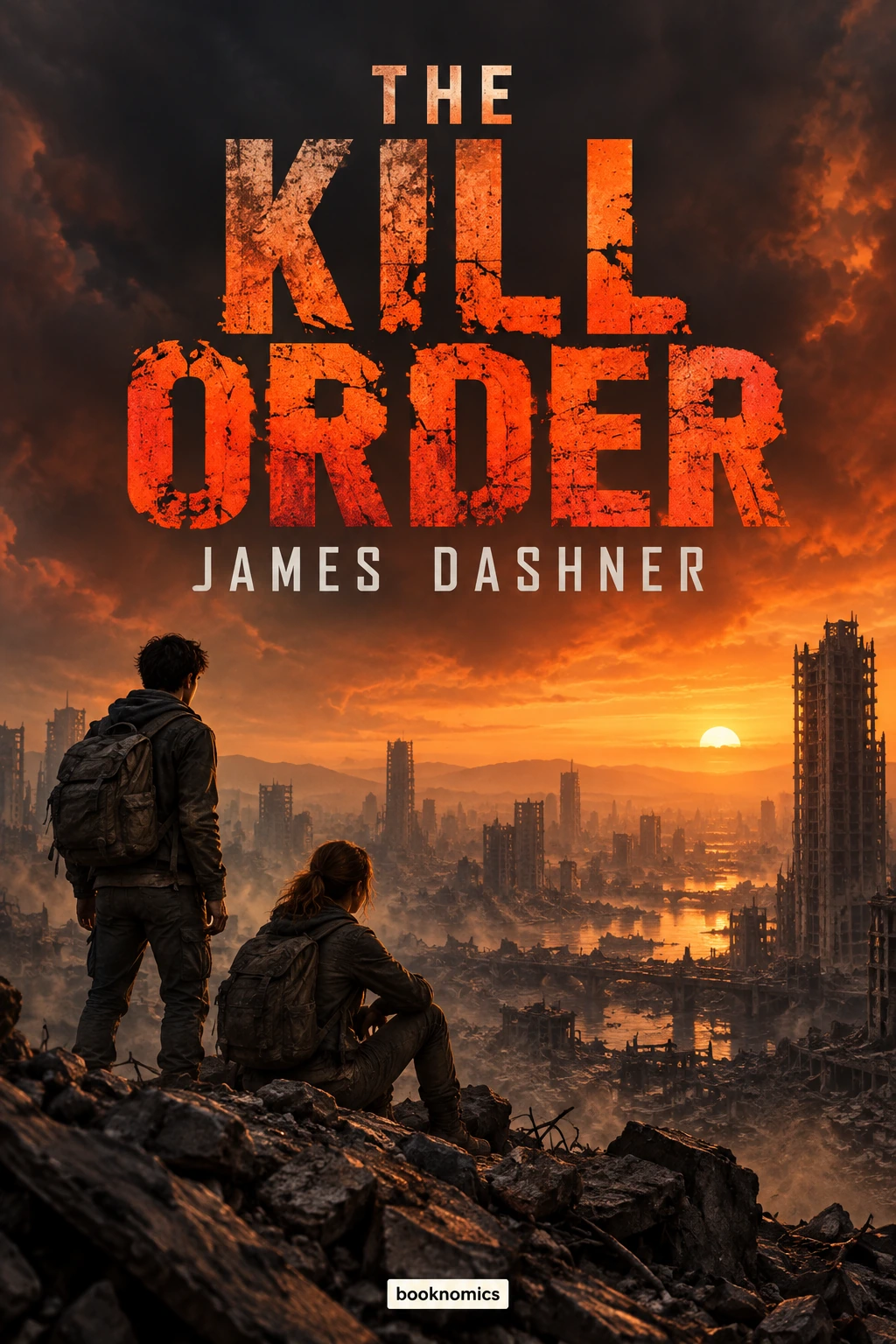
The Kill Order summary
The Kill Order by James Dashner is approached here as a science fiction work whose meaning emerges from narrative structure, character pressure, setting, and consequence. Published in 2012, this Booknomics guide uses speculation, technology, society, identity, power, and future systems as reading lenses. The aim is original spoiler-aware analysis without reproducing passages, reconstructing chapters, or imitating the author's prose. A condensed guide cannot preserve voice, pacing, atmosphere, or every scene-level ambiguity, so close readers should return to the original work.
Key ideas
speculation. In The Kill Order, this lens helps explain how the narrative moves from setup to pressure and then toward consequence. The reader should ask how it changes what a character can know, choose, conceal, risk, fear, desire, or understand rather than treating it as a generic genre label. technology. In The Kill Order, this lens helps explain how the narrative moves from setup to pressure and then toward consequence. The reader should ask how it changes what a character can know, choose, conceal, risk, fear, desire, or understand rather than treating it as a generic genre label. society. In The Kill Order, this lens helps explain how the narrative moves from setup to pressure and then toward consequence. The reader should ask how it changes what a character can know, choose, conceal, risk, fear, desire, or understand rather than treating it as a generic genre label. identity. In The Kill Order, this lens helps explain how the narrative moves from setup to pressure and then toward consequence. The reader should ask how it changes what a character can know, choose, conceal, risk, fear, desire, or understand rather than treating it as a generic genre label. power. In The Kill Order, this lens helps explain how the narrative moves from setup to pressure and then toward consequence. The reader should ask how it changes what a character can know, choose, conceal, risk, fear,…
Analysis
Central reading The Kill Order by James Dashner can be examined through narrative structure without reproducing the original text. The deeper questions concern information, character pressure, setting, choice, and consequence. Strong interpretation remains tied to what the work establishes while preserving ambiguity where the work leaves room for it. 1. Speculation speculation matters in The Kill Order because it separates surface action from narrative function. An event can advance the plot while also changing trust, redistributing information, increasing vulnerability, or redefining a relationship. Reading at both levels explains why developments matter beyond the moment in which they occur. A second test concerns point of view. speculation may look different depending on who knows what, who misunderstands the situation, and what remains concealed. Suspense and surprise depend on these gaps in knowledge. The role of speculation also changes across time. Early in the work it may create expectation; later it can become evidence, reversal, conflict, sacrifice, or reinterpretation. Later knowledge can change the significance of earlier choices without erasing earlier uncertainty. Compare speculation with technology. Their interaction can expose a conflict between desire and evidence, loyalty and safety, systems and individuals, or appearance and reality. Finally, test the bounda…
Practical application
Reading & reflection application 1. Track speculation across three points. 2. Compare technology with society. 3. Note where information is limited or delayed. 4. Use identity to identify a decision whose consequences become clearer later. 5. Ask whether power is mainly cause, constraint, symbol, or result. 6. Reconsider the ending through future systems.
Continue exploring
More English book summaries · Browse the full library · More Science Fiction books
- A Closed and Common Orbit
Becky Chambers
Science Fiction - A Princess of Mars
Edgar Rice Burroughs
Science Fiction - Artemis
Andy Weir
Science Fiction - Atlas Shrugged (Centennial Ed. HC)
Ayn Rand, Sophie Bastide-Foltz, Adrian Rand
Science Fiction - Binti
Nnedi Okorafor
Science Fiction - Chapterhouse Dune
Frank Herbert
Science Fiction