Travel
Wise and otherwise
by Sudha Murti
An original Booknomics guide to the work’s structure, evidence, ideas, context, and limitations.
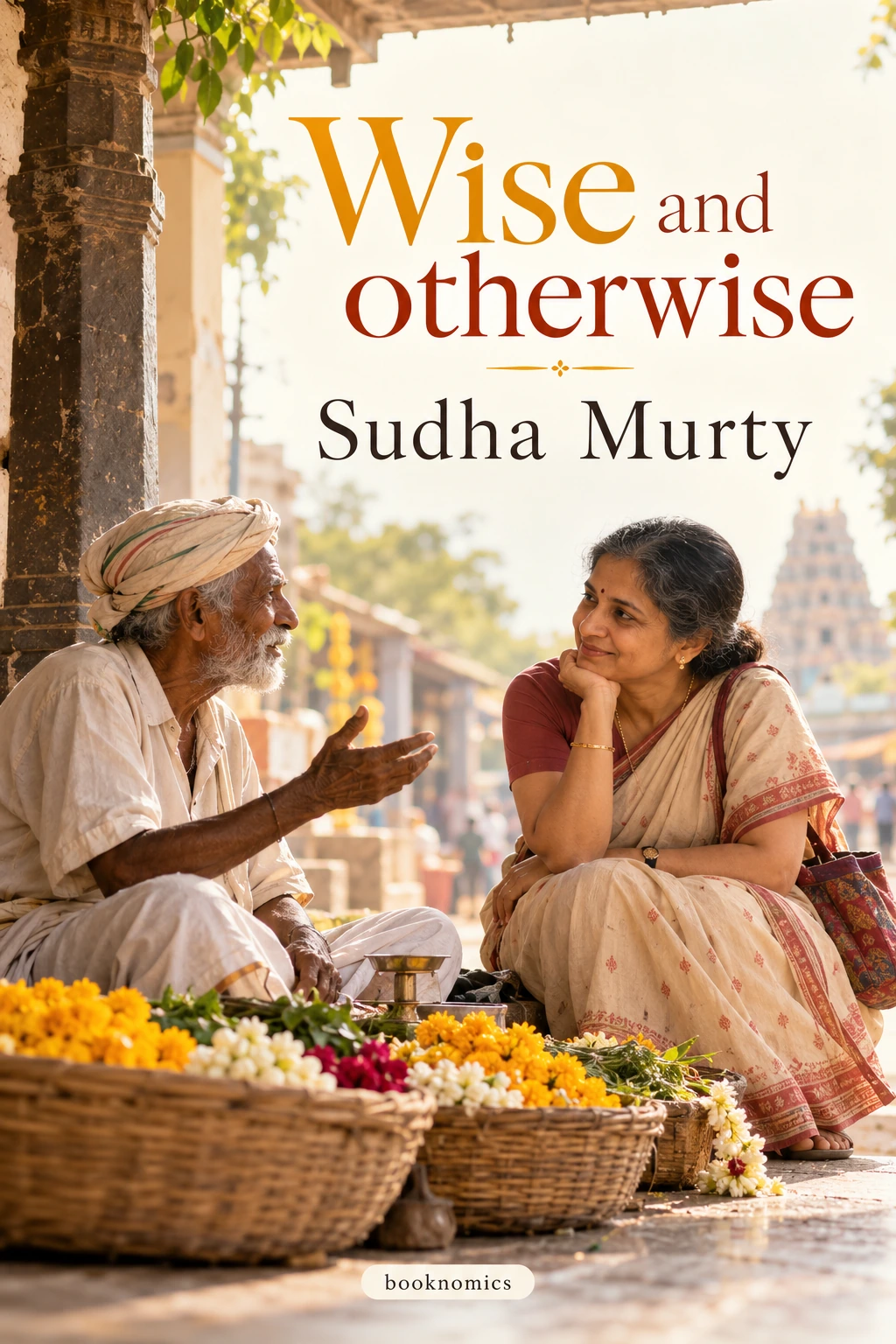
Wise and otherwise summary
Wise and otherwise by Sudha Murti is approached here as a travel work shaped by chronology, selection, observation, perspective, evidence, and consequence. Published in 2002, the guide asks how the work organizes place, movement, observation, culture, encounter, and perspective, what kinds of evidence or memory support the account, and where hindsight may change interpretation. The aim is original explanatory analysis rather than copied prose or a substitute for the original work.
Key ideas
place. In Wise and otherwise, this lens helps separate event or observation from later interpretation. A narrative work selects what to include, what to emphasize, and how to connect one stage to another. The reader should ask what evidence, memory, testimony, or context supports the account and how this element changes the larger story. movement. In Wise and otherwise, this lens helps separate event or observation from later interpretation. A narrative work selects what to include, what to emphasize, and how to connect one stage to another. The reader should ask what evidence, memory, testimony, or context supports the account and how this element changes the larger story. observation. In Wise and otherwise, this lens helps separate event or observation from later interpretation. A narrative work selects what to include, what to emphasize, and how to connect one stage to another. The reader should ask what evidence, memory, testimony, or context supports the account and how this element changes the larger story. culture. In Wise and otherwise, this lens helps separate event or observation from later interpretation. A narrative work selects what to include, what to emphasize, and how to connect one stage to another. The reader should ask what evidence, memory, testimony, or context supports the account and how this element changes the larger story. encounter. In Wise and other…
Analysis
Central reading Wise and otherwise by Sudha Murti can be read as a shaped narrative of experience, place, public life, and historical events. The central task is to distinguish what happened or was observed from how the author organizes and explains it, while keeping evidence quality, perspective, and hindsight visible. 1. Place and Movement place matters in Wise and otherwise because narrative nonfiction is never only a container for facts. Selection, sequence, emphasis, geography, and hindsight shape what the reader notices. A careful reading asks what evidence supports a scene or interpretation, what is reconstructed from memory, what comes from public record or observation, and what remains uncertain. A second question concerns scale. movement can look different at the level of an individual, a family, a city, an institution, a region, or a historical period. Moving between scales prevents the account from turning a complex outcome into a single personality trait. The relationship between place and movement is especially useful. Personal choice operates inside constraints, while institutions, geography, and circumstances still leave room for agency. Hindsight is another boundary condition. Once outcomes are known, earlier moments can seem like obvious turning points. Wise and otherwise is more illuminating when the reader preserves the uncertainty people faced at the time.…
Practical application
Study & critical application 1. Define place in your own words. 2. Identify what evidence supports movement. 3. Compare observation with culture. 4. Write one boundary condition for encounter. 5. Identify one plausible counterargument involving perspective. 6. State what evidence would make you revise your interpretation.
Continue exploring
More English book summaries · Browse the full library · More Travel books
- A Time of Gifts
Patrick Leigh Fermor
Travel - Down Under (In a Sunburned Country)
Bill Bryson
Travel - Last Chance to See
Douglas Adams, Mark Carwardine
Travel - Roughing It
Mark Twain
Travel - The Innocents Abroad
Mark Twain
Travel - The Lost Continent
Bill Bryson
Travel